
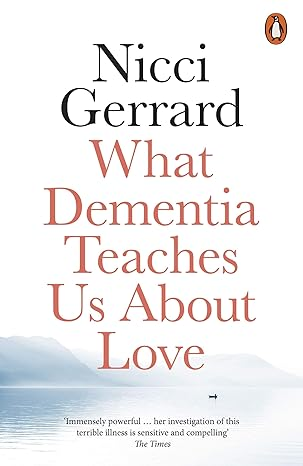
I came across this book in the library as I was navigating a personal pool of grief after the death of my lovely mother-in-law recently. According to her death certificate, she died of “mixed dementia” after 7 years in a care home. Thankfully we didn’t have massive personality change or anger or even deep frustration to contend with but it was a significant journey for the family and now it was over, I couldn’t stop thinking about what had happened and whether or not there was more we could have done.
Nicci (a journalist and one half of crime writer Nicci French) had a different (more terrible) experience which led her to pursue more answers and more change. Together with her friend Julia Jones, after the death of her father in 2014, she successfully founded “John’s Campaign” which insists that the carers of people with dementia have the same right as parents of sick children, to accompany them when in hospital. This was borne out of the loneliness she saw her own father suffer but also from the dozens of interviews she conducted as part of her investigation.
We meet a large number of fascinating people and their fascinating carers in the book and I personally learned such a lot about the disease, the way it manifests and the way people deal with it and cope. Those with dementia feel all sorts of emotions, particularly shame perhaps, and by association, so do their family. “… of being seen naked. Naked in our body and in our soul: that soft and quivering part of us that we try all our lives to protect from the judging world – and, crucially, from ourselves”. “… the inside comes out in unwanted ways when the boundaries that have been policed for so long and with such rigour collapse. …”But a body is never just a body. A body is where we live and how we live”.
And then, there is often no option but to now live in a home. “Home is where you live and are in control of your life. A home is usually the place you go before you die”.
Although Nicci does not share my Christian faith, the book was a great encouragement and her love and compassion for her family and beyond shine through. Her understanding of the people who live and work in care homes is first rate although the sad reality is “All over the world, in poor countries and rich ones, hundreds and thousands of old and vulnerable people live the last part of their life in fear and distress, in loneliness and in sorrow”.
This book is a cultured, poetic piece of writing. In a brutally honest way, she wonderfully articulates for me lots of ideas and memories, things in my own life experience I haven’t been able to put pin down and put my finger on. I am the richer and more helped from reading it and as such, I recommend it to you.
Rachel Simonson April 2025